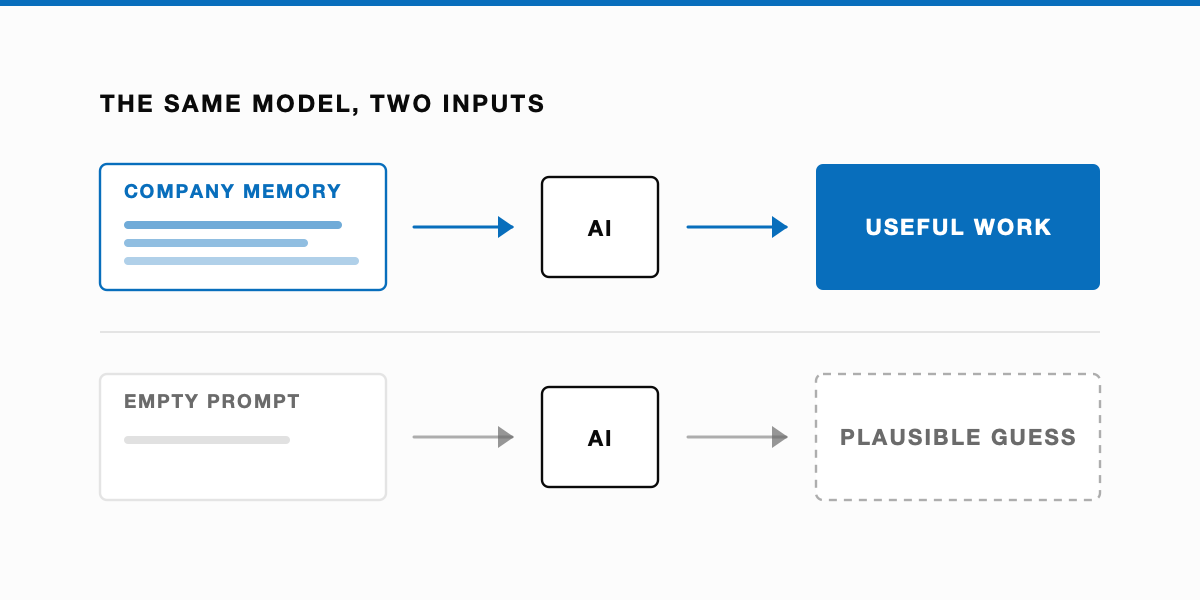
Do Not Automate a Marketing Process You Cannot Explain
Automation does not clarify a marketing process. It turns the team's existing logic, omissions, and unresolved decisions into a system that can repeat them faster.
A weak process does not become strong when it moves into software. The ambiguity becomes harder to see. The team stops debating the decision because the workflow appears to have made it.
This is how marketing automation goes wrong. A person who understands the work builds a prompt or sequence around what is obvious to them. The system runs. Another person receives an output without the assumptions, exception logic, or standard that produced it. When the result fails, nobody can tell whether the input was wrong, the rule was weak, or the job never had one agreed method.
The requirement before automation is simple: explain the process in terms another qualified operator can inspect, execute, and challenge.
If the team cannot explain how the work should happen, the system has no stable job to perform.
Automation Makes Ambiguity Cheaper to Repeat
Manual work contains hidden control. An experienced operator notices that a customer quote is too old, a segment definition changed, a campaign request conflicts with positioning, or a lead should not receive the default treatment. They stop, ask a question, and repair the work.
An automated system sees what the process gives it. If freshness, conflict, authority, and completion were never declared, the system can produce a clean output that bypasses the judgment the manual process depended on.
That failure can look like productivity. More briefs get drafted. More records get routed. More messages reach a queue. Activity rises while correction work moves downstream.
The decision is not whether AI can complete a step. The decision is whether the company has defined the job well enough to know when the step was completed correctly.
The Manual Process Must Survive Explanation
Do not document an ideal process in a workshop and automate that. Follow a real piece of work from request to accepted result. Record what the operator checks, which sources they trust, where they make a choice, what causes a stop, and who resolves the problem.
The objective is not a click-by-click procedure. Interfaces change. The durable part is the operating logic: what enters, what gets decided, who owns the consequence, which conditions leave the normal path, and what counts as done.
If two experienced people handle the same case differently, do not hide the disagreement inside a prompt. Decide whether one method is right, both are valid under different conditions, or the work still requires human judgment.
Write the Five-Part Automation Specification
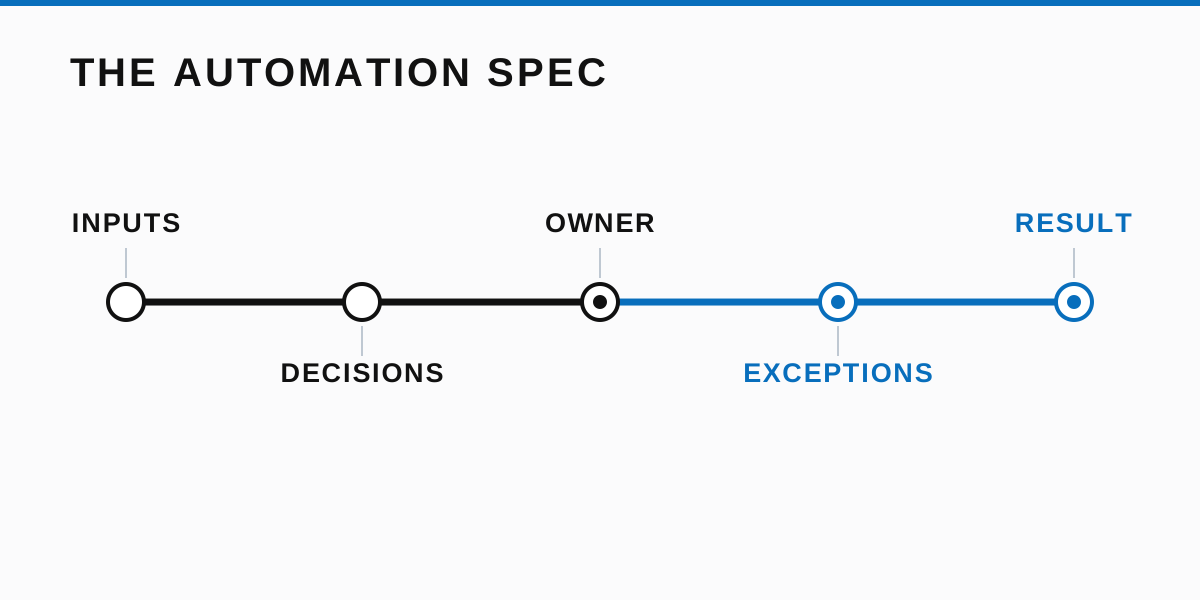
A useful process specification is short enough to use and precise enough to expose disagreement. Five contracts define the job before a tool receives it.
- Inputs
- What starts the work?Name the trigger, required fields, approved sources, freshness standard, and what to do when information is missing or contradictory.
- Decisions
- What choices change the valid next step?State the rule, evidence required, permitted discretion, and conditions that prevent the default action.
- Owner
- Who remains accountable?Name the business owner of the result, the maintainer of the system, and the person authorized to change the rule.
- Exceptions
- When must the normal path stop?Declare the visible exception state, resolver, context they receive, response expectation, and route back into the work.
- Result
- What proves completion?Define the exact output, destination, acceptance test, downstream action, and measure that determines whether the job was worth doing.
The specification is incomplete when it describes only the happy path. The process becomes useful when another operator can predict what happens after a missing field, conflicting source, failed action, or request outside policy.
Inputs Need Source Truth, Not a Data Dump
Giving a workflow more documents does not guarantee better context. The system needs to know which source controls each claim or decision, how current it must be, and what happens when sources disagree.
The context contract defines the evidence an AI workflow may use. The automation specification adds the operating question: which input is required for this job, and who repairs it when it is wrong?
For a campaign brief, the approved positioning may control the core claim while recent customer evidence shapes the problem language. A sales note can add context without receiving authority to rewrite the category. These are process decisions. A retrieval layer cannot invent them.
Decisions Need Boundaries, Not Prompt Tricks
A long prompt can make an undefined decision look specific. It cannot settle a disagreement the business has avoided.
Separate rules from judgment. A rule maps declared evidence to a known action. Judgment resolves a tradeoff where evidence, policy, or priorities do not produce one valid answer. AI can help prepare that choice. It should not quietly turn its own confidence into business authority.
OpenAI's agent guidance recommends turning routines into clear instructions, defining a specific action or output for each step, and capturing common variations with conditional branches. That guidance works because the operating procedure exists before the model receives it.
Exceptions Are Part of the Process
Teams often treat exceptions as rare failures to handle after launch. In marketing, they are regular work. A claim lacks support. A region uses different terms. The CRM has duplicate records. A campaign request conflicts with an active customer promise.
Each exception needs a visible state and a named resolver. The system should preserve the input, output, attempted action, source versions, and reason it stopped. The resolver should receive enough context to decide without reconstructing the run.
If exceptions occur constantly, the process boundary is wrong. Narrow the eligible work, improve the source truth, or keep the job manual until the valid paths are understood.
Choose the Least Variable System That Can Finish the Job
Once the process is clear, choose the operating pattern. Anthropic distinguishes workflows, where models and tools follow predefined code paths, from agents, where the model directs its own process and tool use. It recommends starting with the simplest solution and adding complexity only when it improves the result.
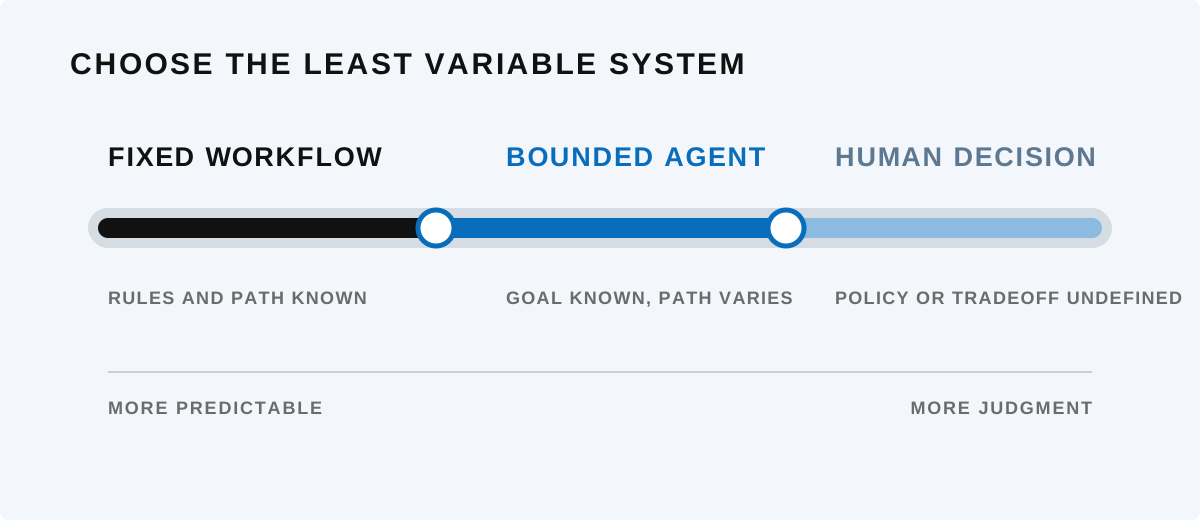
Use a fixed workflow when the trigger, sequence, rules, and destination are known. Put AI inside a fixed workflow when one step needs bounded interpretation, such as turning messy notes into declared fields.
Use a bounded agent when the goal is clear but the valid path depends on evidence discovered during the work. Keep its tools, sources, completion rule, and stop conditions narrow.
Keep the decision human when policy is unsettled, evidence conflicts, or the choice changes strategy, budget, access, reputation, or a customer commitment. The system can prepare the evidence without owning the tradeoff.
Test the Process Before Adding Authority
Run representative cases through the specification before connecting write access or external delivery. Include ordinary work, incomplete inputs, conflicting evidence, duplicates, and requests outside scope.
Start in draft or read-only mode. Compare the system's decisions with the declared standard, then inspect every correction. A correction should change the source truth, rule, eligible scope, or exception path. Rewriting the output by hand teaches the system nothing.
OpenAI's workspace-agent guidance recommends testing straightforward examples alongside messier requests with missing context or ambiguity. It also supports explicit approvals and human checkpoints. Those controls become useful only when the team knows which action requires approval and why.
Measure Correct Completion, Not Run Count
Runs, messages, and tool calls measure activity. They do not prove that the marketing job finished correctly.
Track eligible jobs completed without correction, human review time, exceptions by reason, repeated failures, and cost per accepted result. Then connect the accepted result to the operating outcome the business owner already owns.
Include maintenance. Source changes, tool changes, rule revisions, exception handling, and reconciliation are part of the automation cost. A system that saves drafting time and creates more review work has moved the labor.
The broader AI Agents + Automations operating page covers authority, system choice, failure handling, and measurement in detail. The rule here comes first: no system choice is sound until the job can be explained.
The One-Sentence Version
Write the inputs, decisions, owner, exceptions, and expected result before turning a marketing process into software.
Sources
Frequently Asked Questions
What Must Be Defined Before Automating a Marketing Process?
Define the approved inputs, the decisions the process makes, one accountable owner, the exception path, and the expected result with an acceptance test.
Should Every Documented Marketing Process Be Automated?
No. Automation is justified when the work repeats often enough, the result can be tested, and the full operating cost is lower than the current method.
When Should a Marketing Team Use an AI Agent Instead of a Fixed Workflow?
Use a bounded agent when the goal and permitted tools are clear but the valid path changes with the evidence. Use a fixed workflow when the path can be declared in advance.
Who Owns an Automated Marketing Process?
The business owner remains accountable for the result and policy. A system owner maintains the workflow, and named subject experts resolve exceptions tied to source truth.