The First 20 Questions Your Company Should Own in AI Search
Most companies can name hundreds of keywords and cannot name the 20 questions that decide whether a buyer understands the problem, trusts the solution, and knows what to do next. Start with the questions.
AI search makes it easier to ask long, specific, multi-part questions. Google says people are using AI Mode for more complex questions and follow-ups, while OpenAI describes ChatGPT search as a way to connect users with original sources inside a conversation.
This changes the planning unit. A keyword tells you what phrase appeared in a query. A commercial question tells you what the buyer is trying to decide.
The first AEO job is to identify the questions your company has earned the right to answer. Then make those answers direct, defensible, and easy to find.
Owning a Question Is a Standard, Not a Guarantee
No company can guarantee that an answer engine will cite it. Owning a question means becoming the clearest credible source available: the company answers directly, shows its evidence, explains the tradeoffs, and keeps the answer current.
The standard is higher than mentioning the topic. If a buyer asks a precise question and the company responds with a vague landing page, the question is still unowned.
A question is not owned because the company ranks for a phrase. It is owned when the answer helps a buyer make the next decision.
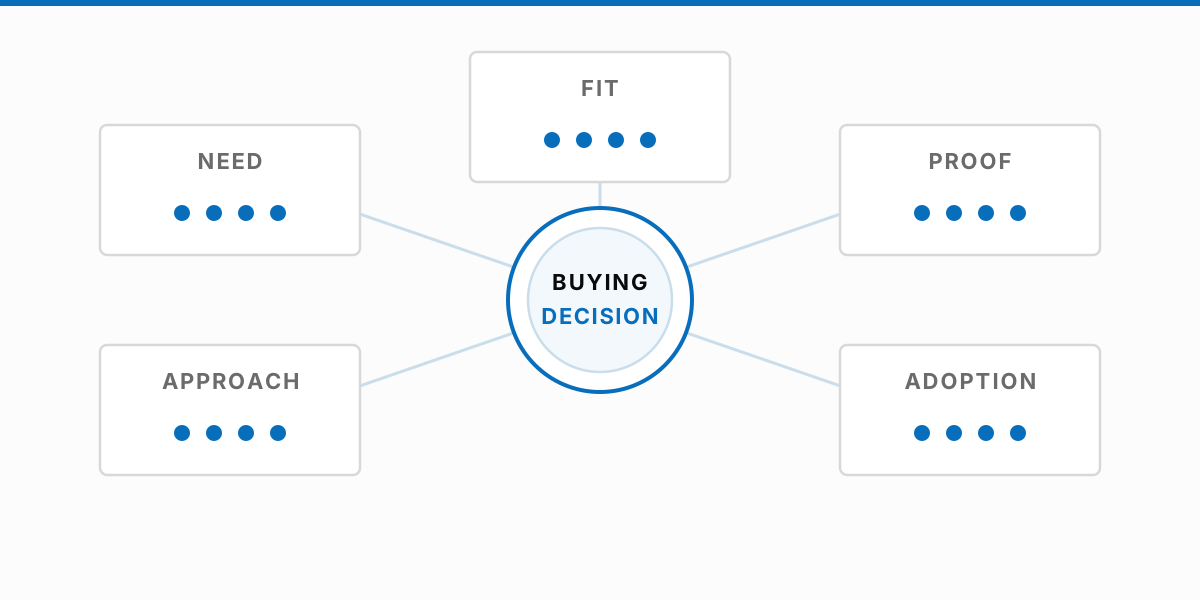
Start With Five Parts of the Buying Decision
The first 20 questions should cover the decisions that move a buyer from recognizing a problem to adopting a solution. Four questions in each group are enough to expose the largest gaps without creating a 200-row content backlog.
Need
- What problem does this category solve?
- What changes inside a company when the problem becomes urgent?
- What does the company lose by leaving the problem unsolved?
- Which teams or customers feel the cost first?
Approach
- What are the credible ways to solve the problem?
- When should a company build, buy, hire, or do the work manually?
- What inputs must exist before any approach can work?
- Which common approaches fail, and why?
Fit
- Who is the solution best suited for?
- Who should not buy it?
- What must be true inside the company before it will work?
- How does it compare with the most credible alternative?
Proof
- What evidence shows that the approach works?
- How should a buyer measure the result?
- Which security, data, or integration requirements matter?
- What are the real limitations and tradeoffs?
Adoption
- How long does implementation take?
- Who needs to own the result?
- What should happen in the first 30 days?
- What ongoing work keeps the result useful?
These are templates. Replace category language with the terms customers actually use, then make each question specific to the decision your company can support with real evidence.
Prioritize Commercial Impact and Answer Weakness
Not every unanswered question deserves a page. Score each question on two dimensions: how much it affects a buying decision and how weak the current public answer is.
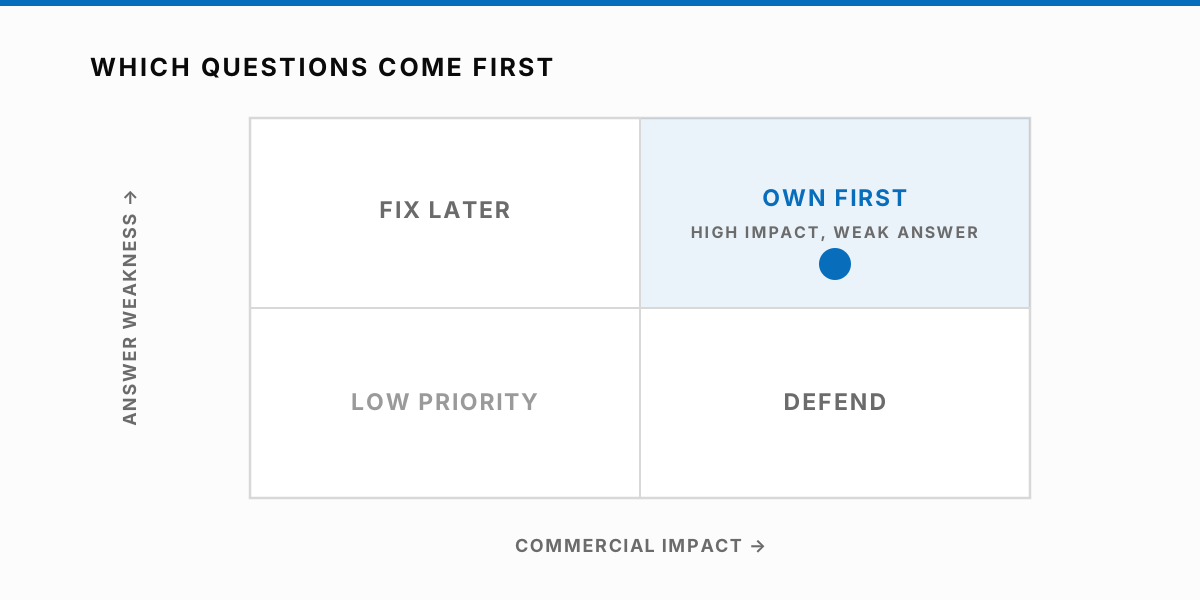
The upper-right quadrant is the first work queue. A high-impact question with a weak answer can distort fit, hide the company's strengths, or let a competitor define the category. A low-impact question with a weak answer can wait.
Add one more gate before committing: can the company answer the question honestly? If the required evidence does not exist, the work belongs in product, research, or customer proof before it belongs on the content calendar.
One Strong Page Can Own Several Questions
Do not turn the list into 20 thin articles. Closely related questions often belong on one substantial page. A category guide might answer need and approach. A comparison page can cover fit and tradeoffs. An implementation guide can handle adoption.
Google's guidance on helpful content asks whether a page provides original information, substantial value, clear sourcing, and enough information for a reader to achieve a goal. Those standards are more useful than page count.
Use the broader AEO system to decide where an answer should live, and connect the pages with descriptive internal links. If the question depends on customer reality, begin with current customer research. If it depends on category choice, align it with positioning and category strategy.
A Strong Answer Does Four Jobs
The page should answer the question early. Then it should show why the answer is credible, explain where the answer changes, and help the reader make the next decision.
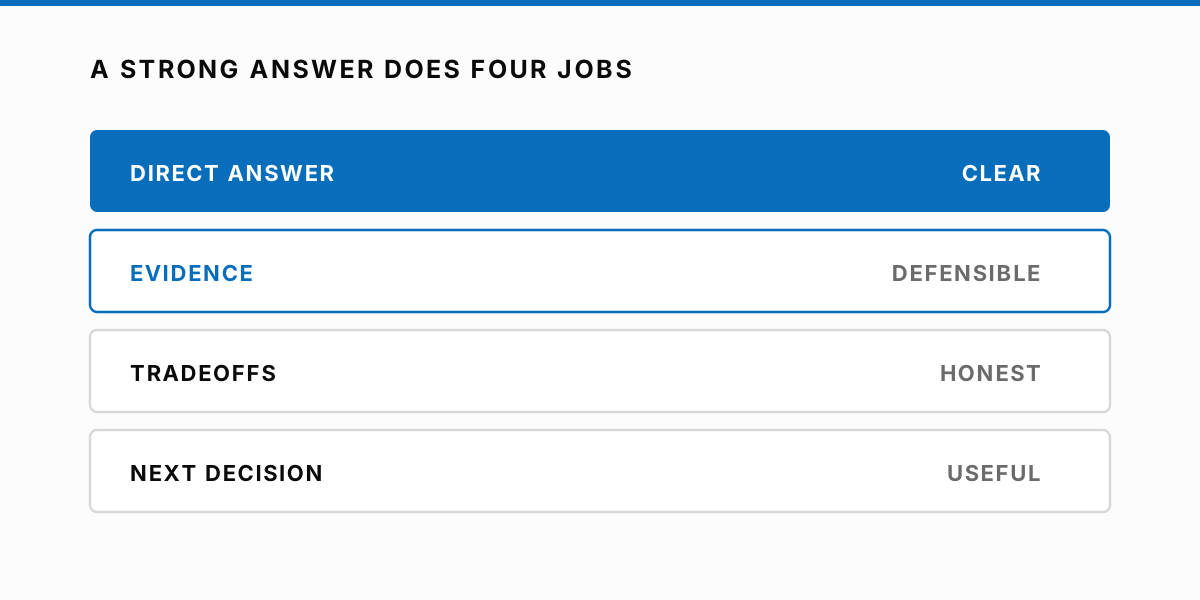
This structure also gives AI search a cleaner source. The direct answer is easy to extract. The evidence makes it defensible. The tradeoffs prevent the page from reading like a sales claim. The next decision gives the reader a reason to continue.
The One-Sentence Version
Own the questions that decide need, approach, fit, proof, and adoption before producing another batch of AEO content.
Sources
Frequently Asked Questions
What Does It Mean to Own a Question in AI Search?
It means becoming the clearest credible source for the answer across the company site and supporting public evidence. It does not guarantee a citation or recommendation.
Should Every Question Become a Separate Page?
No. One strong page can answer several closely related questions. Split a question into its own page only when it requires a distinct decision, audience, evidence set, or next step.
How Should a Company Prioritize AEO Questions?
Start with questions that have high commercial impact and a weak or inaccurate current answer. Confirm that the company has enough evidence and expertise to answer them well.
Where Should the First 20 Questions Come From?
Use the decisions customers must make about need, approach, fit, proof, and adoption. Sales conversations, product requirements, implementation questions, and executive objections can reveal the exact wording.