Give AI Search Something Worth Citing
Most company content repeats information that already exists. A stronger source contributes evidence, experience, a useful framework, or a method that another answer genuinely needs.
AI search does not need another page that summarizes the same five pages already on the web. It needs a source that changes what can be known, checked, or decided.
OpenAI describes ChatGPT search as an experience that answers with links to relevant web sources. Google asks whether content provides original information, reporting, research, or analysis, and whether it demonstrates first-hand expertise. Those standards point to the same practical problem: a page has to contribute something before another system has a reason to depend on it.
This does not guarantee a citation. No publisher controls that decision. It does give the company a better target than producing more generic AEO articles.
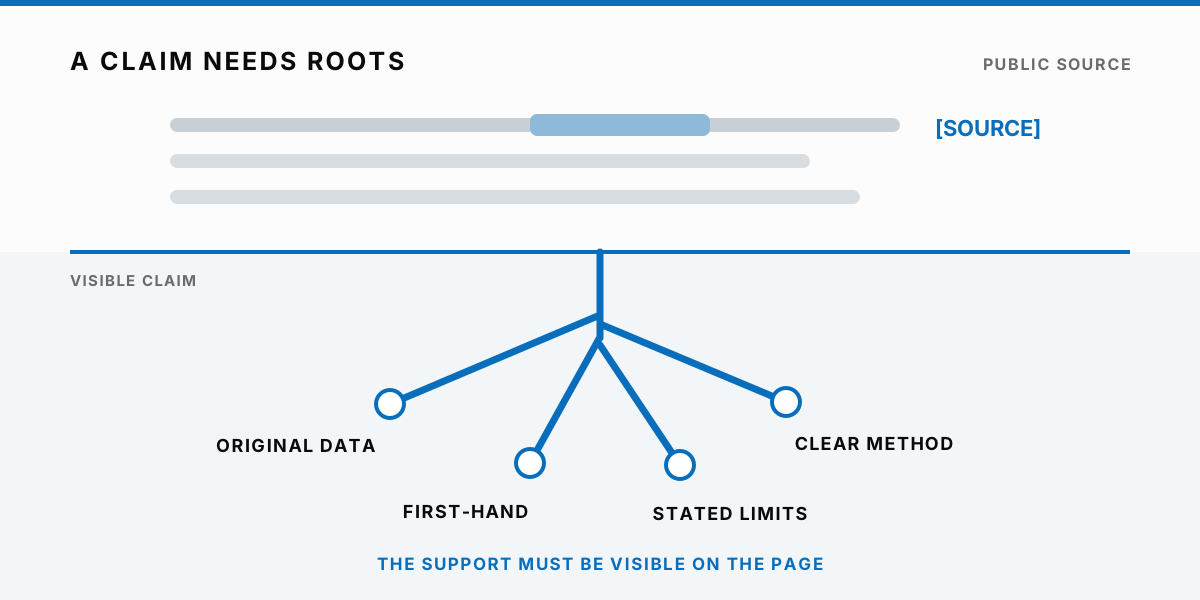
A claim becomes more useful when the reader can see what supports it, how it was produced, and where it stops applying.
Most AEO Content Adds No New Information
Search the category before drafting. If the proposed page will restate the same definitions, benefits, and steps already published by every competitor, the page begins with no source advantage.
A clean summary can still help a reader. It is less likely to become a necessary source because the underlying information is available elsewhere. Publishing ten versions of the same public knowledge increases page count without moving the information frontier.
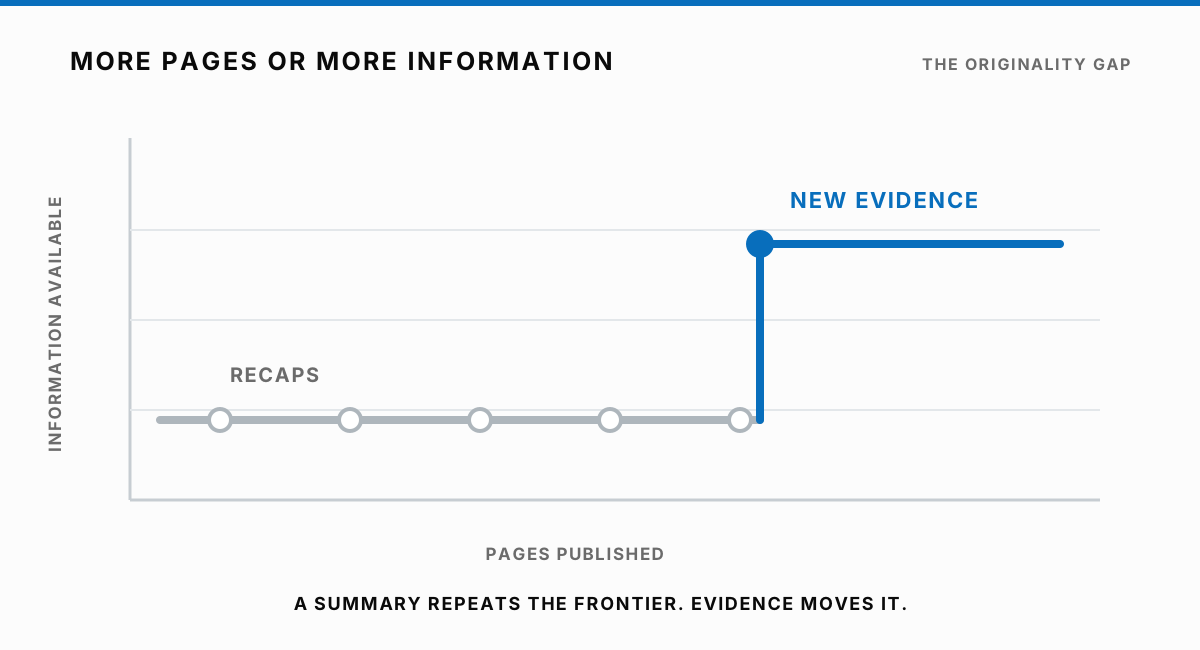
The editorial brief should name the new contribution before the writer begins. If nobody can state it in one sentence, the company is probably preparing another recap.
Four Forms of Source Value
Original research is powerful, but it is not the only way to create a useful source. Companies already possess evidence in operations, product work, customer interactions, experiments, implementation, and executive decisions. The job is to turn that evidence into a public artifact without inventing certainty or exposing information that should remain private.
- Original researchPublish a new dataset, benchmark, survey, analysis, or structured review. Show the sample, definitions, collection method, exclusions, and limits beside the findings.
- First-hand evidenceExplain what the company actually built, tested, observed, or changed. Separate the observation from the interpretation and preserve the conditions that shaped the result.
- Defensible frameworkCreate a classification or decision rule that helps someone make a choice. Define the criteria, show how the parts differ, and test the framework against real cases.
- Clear methodPublish a procedure another operator can inspect or repeat. Name the inputs, decisions, owners, exceptions, and expected output instead of hiding the useful work behind a vague best-practice list.
Original Research Needs a Visible Method
A surprising number without a method is a marketing claim. A source-worthy finding shows where the number came from and how much confidence it deserves.
State who or what was studied, the time window, the sample size, the inclusion rules, the metric definition, and any material limitation. If the sample is directional, say so. If the analysis covers customers rather than the full market, do not present it as a market fact.
Publish the method near the result. Hiding it in a downloadable appendix makes the claim harder to inspect. When possible, provide the underlying table, question set, calculation, or redacted artifact that lets a reader verify the conclusion.
First-Hand Experience Must Contain the Work
"We have seen this before" is not first-hand evidence. It is an assertion of experience.
Useful first-hand material names the starting condition, the decision, what happened, and what the operator learned. It includes the parts that failed, the constraints that mattered, and the point where the lesson may not transfer.
This does not require publishing a client name or a performance number. A company can explain the sequence of a migration, the failure mode discovered during implementation, the tradeoff behind a product decision, or the test that changed an operating rule. Specificity creates the value.
A Framework Must Change a Decision
Renaming common ideas does not create a framework. A defensible framework draws a boundary, sorts cases in a useful way, or reveals a decision that was previously hidden.
Define each category with criteria. Explain what moves a case from one category to another. Show where the model breaks. Then apply it to enough examples that the reader can see whether it holds.
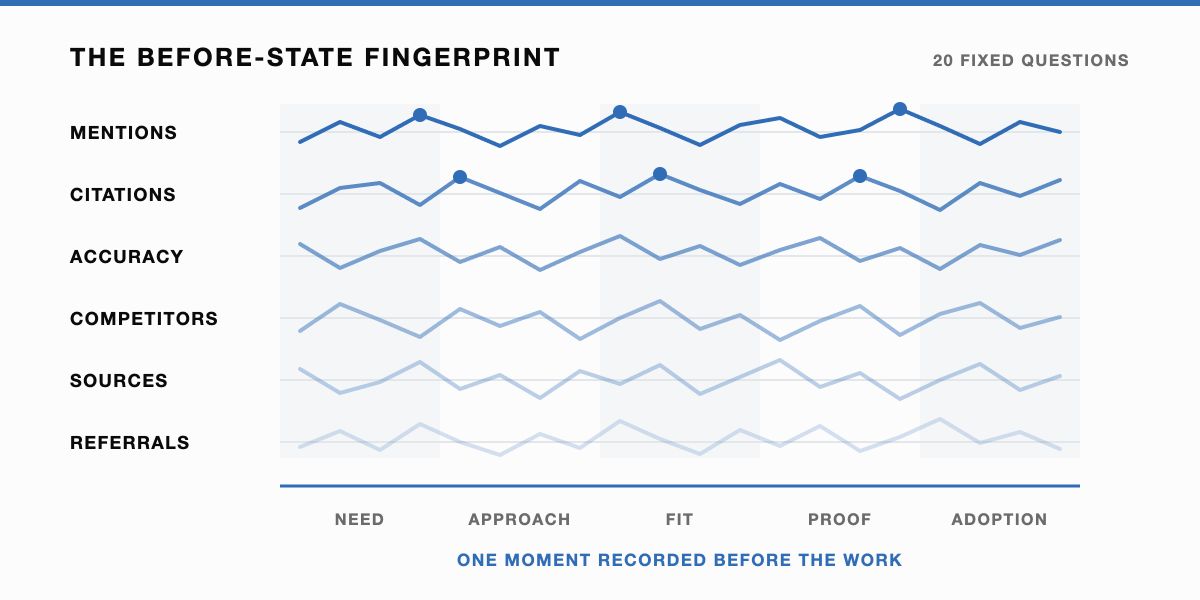
The 20-question buying map is a framework because it changes how a company chooses AEO work. It moves planning from keyword volume to the decisions a buyer must make about need, approach, fit, proof, and adoption.
A Method Should Be Inspectable Enough to Repeat
Methods become useful sources when they expose the decisions inside the work. "Research the audience" is advice. A method states which evidence to collect, how to separate observation from interpretation, who resolves conflicts, and what artifact should exist at the end.
Show the exceptions. Explain what the method does when data is missing, sources disagree, the sample is too small, or the operator lacks authority to make the final decision. Those boundaries often contain more source value than the happy path.
If the company has already built an AI-native marketing engine, its strongest source material may be the declared workflows, decision rules, and quality controls that make the system reliable.
Make Every Important Claim Traceable
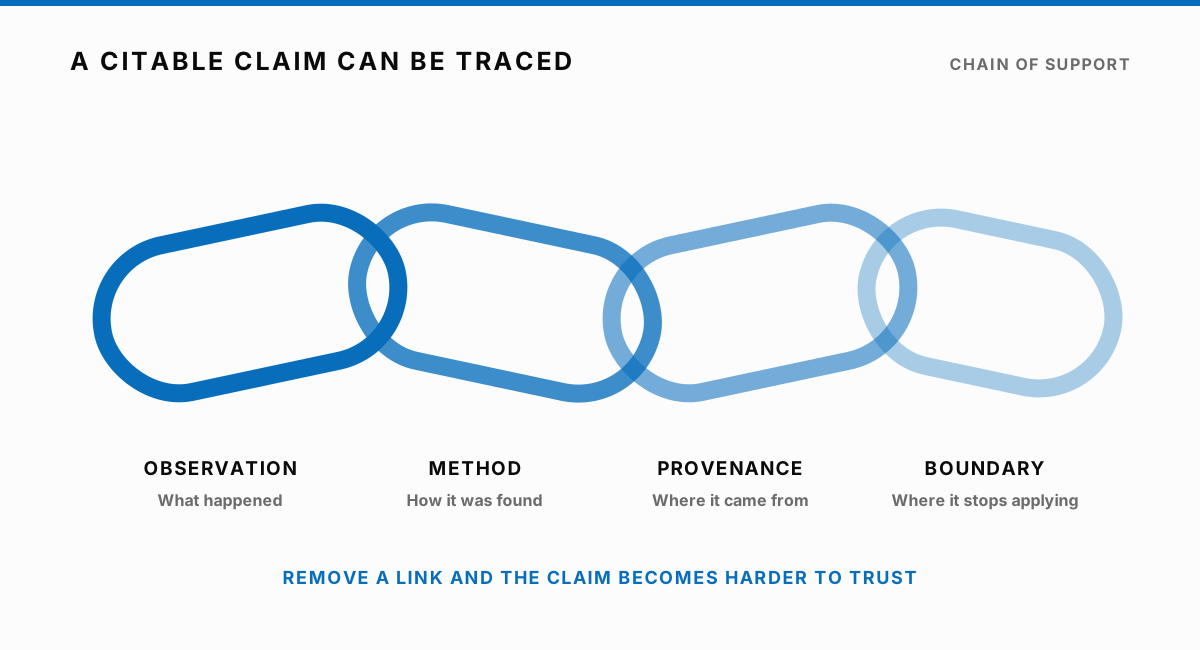
A citable claim should connect to an observation, a method, provenance, and a boundary. The observation states what happened. The method explains how it was found. Provenance identifies where the evidence came from. The boundary explains where the claim stops applying.
Authorship matters too. Google recommends making it clear who created content and how it was produced. Give the page an accurate byline and connect the author to relevant experience. Name contributors when the evidence came from research, product, data, or customer teams.
Keep claims close to their support. Use descriptive headings, visible text, stable URLs, and direct source links. A strong idea buried inside an image, a webinar transcript, or an ungated PDF is harder to retrieve and inspect than the same evidence presented clearly on the page.
Do Not Manufacture Originality
Bad AEO advice can push companies toward fake surveys, invented benchmarks, anonymous expert quotes, or frameworks built only to create a branded acronym. Those assets may look original while adding no trustworthy knowledge.
Use the same editorial standard that applies to every public JordanPhoenix.ai page: no invented number, quotation, result, or certainty statement. If the evidence is an estimate, label it. If the sample is weak, narrow the claim. If the company has no source advantage yet, do the research before publishing.
Measure Source Adoption, Not Page Volume
Use the AEO baseline to see which owned pages appear across important questions, which claims they support, and what outside sources recur beside them.
Track citation frequency, question coverage, answer accuracy, source diversity, and referral evidence as separate measures. A page may become an important source for one narrow question without producing large traffic. Another may attract visits while never supporting an AI-search answer.
The output of the content program should be a growing body of public evidence the category can use. Page count is only the production record.
The One-Sentence Version
Stop summarizing the public web and publish evidence, experience, frameworks, and methods that make the public answer better.
Sources
Frequently Asked Questions
What Makes a Page Worth Citing in AI Search?
A page becomes a stronger source when it contributes useful information, makes the evidence and method visible, identifies who produced it, and states where the claim stops applying. No structure guarantees a citation.
Does Every Citable Page Need Original Research?
No. First-hand operating experience, a defensible framework, or a clear method can add source value when the work is specific, inspectable, and genuinely new.
Can AI-Generated Content Be Cited?
It can be surfaced, but generation alone does not create evidence. The page still needs accurate source material, expert judgment, clear provenance, and a reason for another answer to depend on it.
How Should a Company Measure Whether Its Sources Are Being Used?
Use a fixed AEO baseline and track which owned URLs appear across important questions, the claims they support, citation frequency, source diversity, answer accuracy, and referral evidence.