"Just Make It Go Viral" Is Not a Marketing Strategy
One founder decision can save millions or bankrupt the company: whether marketing helps build the growth strategy or is hired to rescue it later.
A founder can save millions or bankrupt the company based on one decision: when marketing gets involved.
Bring marketing in while the market, product, and growth strategy are still being shaped, and the company has a chance to build something people actually want.
Bring marketing in after those choices are locked, hand the team a finished plan, and tell them to "make it go viral." Now the company is spending money to force something that may never work.
This is common sense to every experienced head of marketing. Many founders and executives still miss it because they think marketing begins after the important decisions have already been made.
They pick the audience, approve the product, book the event, set the launch date, and decide what the company wants to say. Then marketing is handed the plan and held responsible for the number.
By then, marketing can improve the ads, rewrite the landing page, or change the channel mix. It cannot create a real pain point, fix a product people do not prefer, or turn the wrong audience into the right one.
If marketing is accountable for the result, it needs a real role in building the strategy and controlling the execution. Every major decision made without marketing reduces the chance that marketing can produce the result leadership wants.
This choice can define the founder's career. It can help move a company toward an acquisition or IPO, or burn through the runway and drive it into bankruptcy.
Marketing cannot own a result if it was not allowed to help create the strategy.
Virality Is a Result, Not a Plan
People share things because the work gives them something worth sharing. It may be useful, funny, surprising, or unusually clear. The sharing happens because the idea connects, not because someone put "go viral" in the brief.
Marketing can improve the odds. It can start with a problem people already care about, choose a format that fits the idea, and build distribution into the work before it is finished. No team can guarantee virality on command.
Asking marketing to make finished content go viral is like handing sales a product nobody wants and telling them to make every prospect buy it. The request skips the hard decisions and gives the last team in the chain responsibility for all of them.
You see the same mistake in different forms:
- The event is signed before anyone checks whether the right buyers will be there.
- The content is written before anyone checks whether the audience cares.
- The plan is fixed before marketing can challenge the audience, offer, message, or channel.
Marketing may improve the execution around those choices. It cannot travel back in time and make the original decision better.
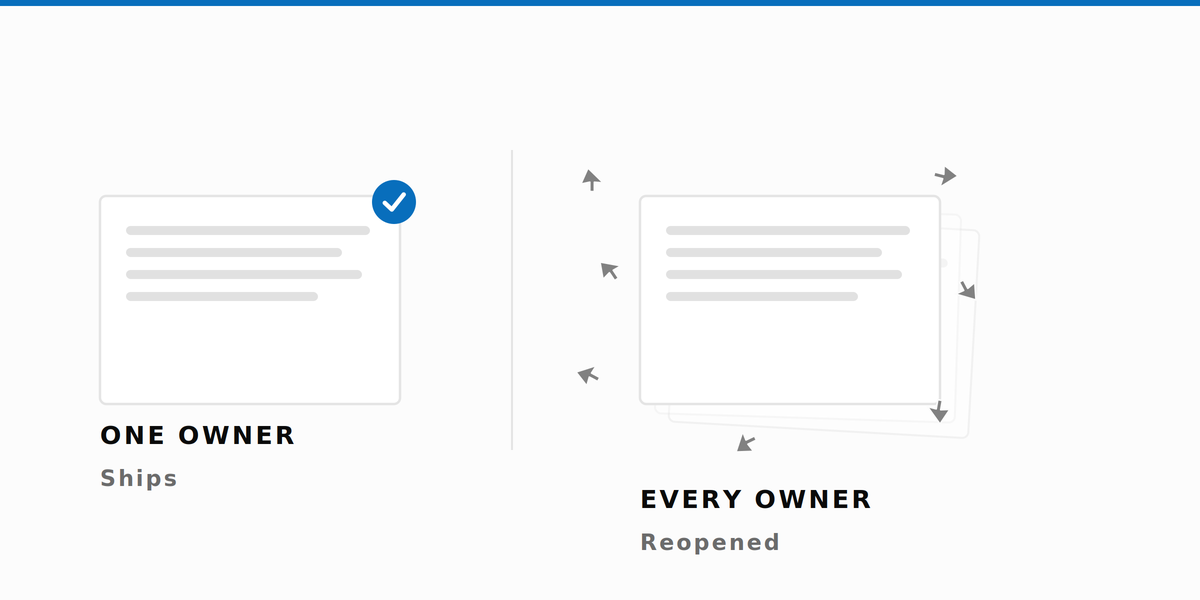
- Leadership commits to the answer.
- Marketing receives the finished work.
- Distribution is expected to hide every weak choice.
- Find a real pain point in a defined group.
- Build a solution they prefer.
- Learn, improve, retain, and earn advocacy.
Why "Marketing Push" Is the Wrong Idea
No one who understands how successful marketing works uses "marketing push" as a serious operating idea. The phrase itself reveals the problem.
A push assumes the company has already decided what to sell, who should want it, and what it wants to say. Marketing is expected to apply enough pressure to make the market accept those choices. Buyers are treated like resistance to overcome.
Good marketing starts from the other side. Find a specific group of people with a real problem. Understand what they do today, what frustrates them, and what would make them switch. Then build a solution they prefer and make the value easy to understand.
World-class marketing matches the right people to the right solution. If anything, it is marketing pull.
Remove "marketing push" from the company vocabulary. The term encourages teams to plan without marketing, promote later, and blame marketing when the plan fails. That mindset is expensive even before the first dollar is spent.
The Four Steps That Make Marketing Work
The right way is simple. Prove each step before you spend heavily on the next one.
A real group has a real problem and will pay to solve it.
The solution wins for a specific and defensible reason.
Use and customer evidence make the product better.
Value creates retention, advocacy, and efficient growth.
One: Find a Real Pain Point
Start with a real group of people and a problem that matters enough for them to change what they are doing. The group cannot be "everyone," and the problem cannot be a mild annoyance that disappears when the budget gets tight.
Look at current behavior. Are people buying another tool, hiring someone, wasting hours on a manual process, or losing money because the problem is still there? Existing sacrifice is better evidence than a survey response. It proves the problem already has a cost.
You also need to know who can buy. The person feeling the pain may not control the budget. Marketing and sales need the full picture: who uses the product, who approves it, what triggers the purchase, and what can stop the deal.
If you cannot name the group, the problem, the current workaround, the cost of doing nothing, and the buyer, stop. The company needs more customer research, not a larger campaign.
Two: Build Something People Prefer
A real problem does not guarantee a good business. Customers already have choices. They can buy from a competitor, build an internal workaround, keep the current process, or decide the problem is not worth solving yet.
Your solution needs a clear reason to win. It might be better, faster, cheaper, easier, safer, or designed for a group the other options ignore. The advantage does not have to be dramatic. It has to matter to the buyer and show up in the actual experience.
"Best in class" is not a reason. Neither is "powered by AI." Those are claims. A useful position tells a specific customer why this product solves their problem better than the alternatives they can actually choose.
Marketing should be involved while those choices are still open. If it arrives after the product, audience, pricing, and promise are fixed, most of the risk has already been locked into the plan.
Three: Let Customer Behavior Correct the Plan
The first version of the strategy is a guess. Customer behavior tells you where the guess is wrong.
Watch the whole path. Are the right people responding? Do they reach value quickly? Do they keep using the product? Do they expand or recommend it? The first point where the path breaks tells you what to fix next.
If the right people ignore the message, the audience, pain point, or promise may be wrong. If they respond but never reach value, the product or onboarding may be the problem. If they use it once and leave, adding more traffic will only produce more churn.
Marketing, product, sales, and customer success should work from the same customer evidence. Each team still owns different decisions, but nobody should be arguing from a different version of reality.
Four: Turn Customer Value Into Growth
Once the product creates real value, the company no longer has to buy every new customer from scratch.
Product-led growth lets people experience value before a sales call and makes the next step obvious. Customer-led growth turns satisfied customers into ambassadors, affiliates, and referrers. Both work because the product has already earned trust.
Do not ask customers to promote something they barely use or do not love. Earn the recommendation first. Then give them a simple way to share the product, make an introduction, or benefit from referring someone who has the same problem.
Match Control With Accountability
Bringing marketing in early does not mean marketing runs the company. It means the function has enough control over its own strategy to be fairly accountable for the result.
The founder sets the business goal, budget, timing, and limits. The marketing leader should own the audience strategy, positioning, message, channel mix, execution, and measurement used to reach that goal. Product, sales, and customer teams bring evidence and fix the problems they own.
You cannot give marketing partial control and full blame. If leadership fixes the audience, offer, budget split, launch date, and channel plan, it has removed most of the choices a marketing leader would use to improve the result.
This is why timing matters. Every permanent choice made before marketing arrives turns part of the strategy job into cleanup. Bring the function in while the company can still change its mind.
How Companies Burn Millions Without Noticing
Bad strategy rarely looks dramatic while it is happening. Everyone is working. The dashboards are full. Money is moving. The company can stay busy for months before anyone admits the basic plan is wrong.
Marketing buys attention from people with no urgent reason to care. Sales spends its time chasing weak leads or explaining a product buyers do not prefer. Customer teams try to save accounts that should never have bought. Product starts building for poor-fit users because those are the customers the weak strategy brought in.
Then leadership replaces the marketer. The new person spends months rebuilding the team, the data, and the strategy, only to discover the same customer problem the last person was not allowed to fix. The company has now spent the money twice while preserving the cause.
The cultural damage can be worse than the wasted spend. Sales blames marketing. Marketing blames product. Product says the promise was wrong. Leadership blames the latest person in the seat. People stop sharing bad news because every problem becomes a fight over ownership.
Strong marketers leave jobs they cannot win. That creates a revolving door across marketing and sales, destroys trust, and makes each restart more expensive than the last.
A company with real demand, a product people prefer, strong retention, and customer referrals has options. A company that keeps buying attention for something customers do not keep eventually runs out of money. This operating choice can help decide whether the outcome is an acquisition or IPO, or bankruptcy.
Four Questions Before You Spend More
Before approving the next large campaign, event, agency, or sales expansion, answer these:
- Which real group will pay to solve which real problem?
- Why will they choose your solution over the other options?
- What proves customers get value and stay?
- How will happy customers help bring in more customers?
If those answers are weak, more promotion is not the next move. The company needs more customer research, a stronger product choice, or a better learning loop. Fix the weak stage before you pay to scale it.
What to Ask Marketing Instead
Replace "make this go viral" with a question an accountable marketing leader can actually answer:
We need this group of customers to choose us, get value, stay, and tell others. What do we need to learn, change, create, and distribute to make that happen?
Ask that question while the important choices are still open. Give marketing the customer evidence, company context, budget, and authority needed to build the answer. Then hold the team responsible for the agreed result.
Every founder makes this choice. Bring marketing in early and build the growth strategy around the customer, or bring it in late and pay it to force a finished plan that may never work.
It is a simple lesson. Learning it before the money is gone can change the future of the company and the founder who built it.
Frequently Asked Questions
Can a Marketing Team Make Something Go Viral?
No team can guarantee virality. Marketing can improve the odds by starting with a problem people already care about, making the work worth sharing, choosing the right format, and planning distribution before the work is finished.
Why Should Companies Stop Saying "Marketing Push"?
The phrase assumes marketing should force a finished plan onto the market. Good marketing starts with the customer, helps shape the solution around a real problem, and pulls the right people toward it.
When Is a Company Ready to Scale Marketing?
When a real group will pay to solve the problem, customers prefer the product to other options, they keep using it, and some are willing to recommend it. Spend should follow proof.
How Should Leadership Hold Marketing Accountable?
Set the business result, budget, timing, and limits. Bring marketing in before the audience, offer, message, and channels are fixed. Then give the marketing leader control over the strategy and execution used to deliver the result.
The AI Tool Arsenal
Many new AI tools are just noise. I test them so you can use the best ones. Use it, watch it, skip it, with the reasoning.
Occasional, no more than weekly. Unsubscribe any time.