Refresh Your Best Pages Before Publishing More AEO Content
The next AEO opportunity may already have a URL. Improve the established pages that shape real buyer decisions before adding another batch of generic content.
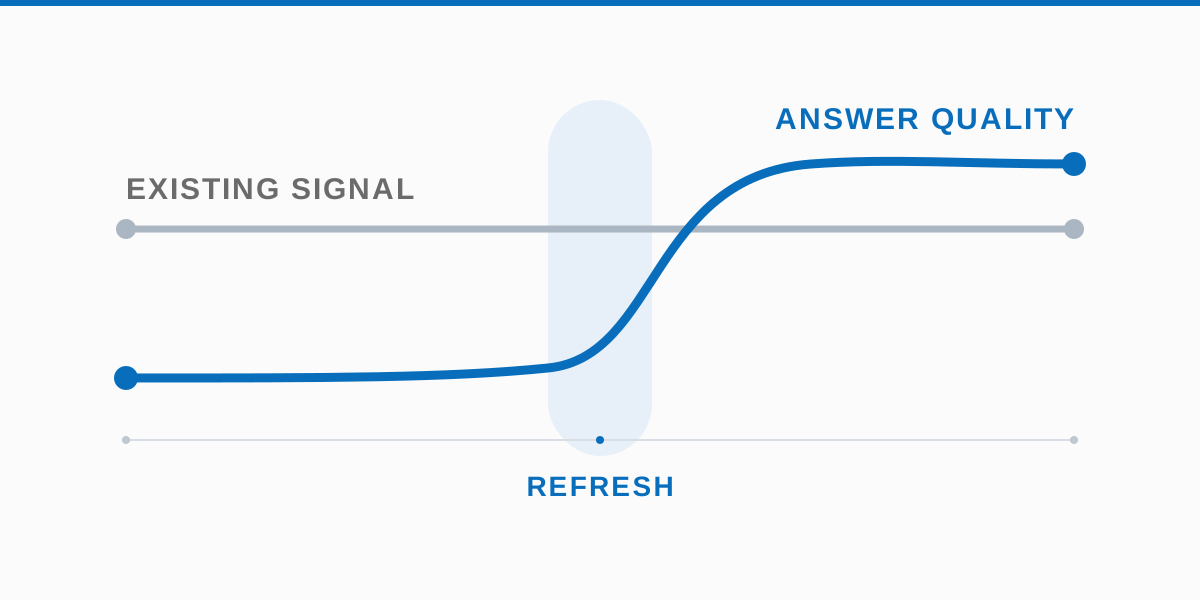
Content teams often treat every weak answer as a request for a new page. They open a blank brief, choose another keyword variation, and add one more URL to a site that already contains an unfinished answer.
That instinct confuses production with progress. An established page may already sit inside the company's internal links, appear for relevant queries, receive qualified visits, support sales conversations, or show up in AI-search citations. Leaving that source weak while publishing a nearby summary divides the evidence and gives buyers two incomplete places to look.
Refresh work starts with a different question: which existing page is closest to becoming the strongest public answer?
Keep the URL when the buyer decision stays the same. Rebuild the answer until the page deserves the role it already occupies.
Start With Evidence of Existing Value
A page is worth reviewing because it matters to a buyer, not because it is old. Look for existing URLs attached to important questions from the company's buying map. Then examine whether those pages already have a path into discovery or decision-making.
Search Console can group performance by page and query, which makes it useful for finding URLs with impressions, clicks, changing demand, or a mismatch between the queries shown and the answer delivered. Analytics can reveal landing sessions and downstream actions. The AEO baseline can show whether the page is mentioned, cited, misrepresented, or ignored across a fixed set of buyer questions.
Add internal evidence too. A page may be valuable because sales sends it repeatedly, customer success uses it to answer a recurring concern, or product documentation points to it. Those signals do not prove that a refresh will improve visibility. They prove that the answer already carries responsibility.
Find the Answer Gap, Not the Age
Old content can still be correct. Recent content can be shallow on publication day. The useful diagnosis is the distance between what the page says and what the buyer now needs to decide.
- The opening avoids the question.The title promises an answer, but the first screen offers category background, brand language, or a long setup before saying anything useful.
- Facts or product details are no longer current.Capabilities, requirements, examples, prices, terminology, screenshots, or market conditions have changed enough to alter the answer.
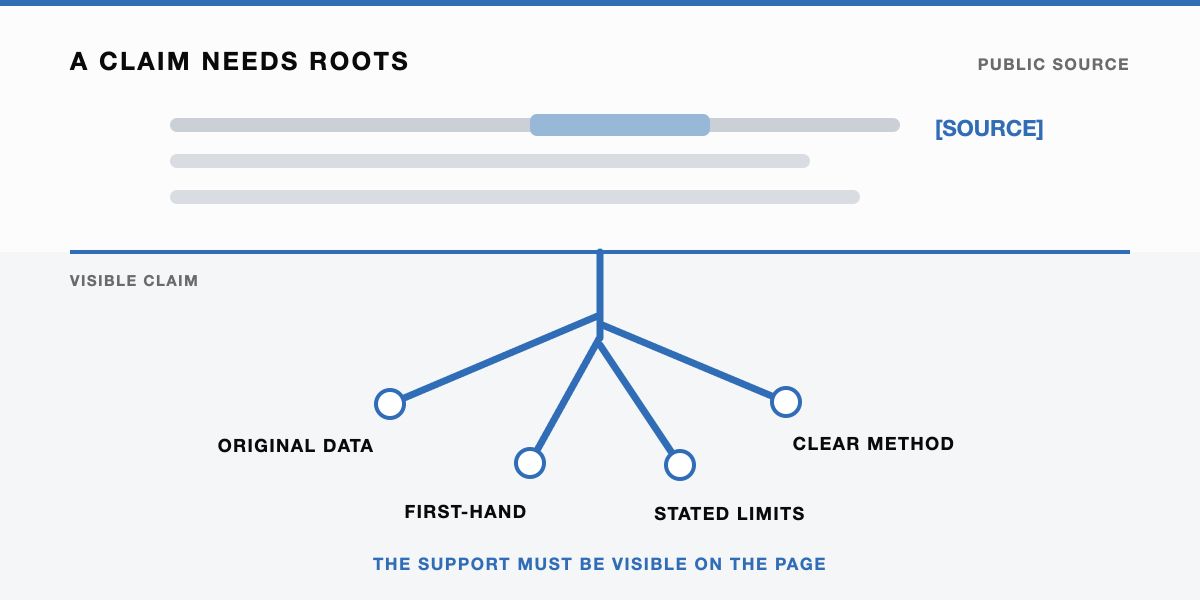
- The page makes claims without visible support.The conclusion may be right, but the evidence, method, author experience, source links, and limits are absent.
- The buyer's tradeoff is missing.The page describes a method or product without explaining when it fits, when it fails, what it costs, or what someone must give up.
- The useful material is buried.Important text sits behind a tab, inside an image, below repeated filler, or on a disconnected document that the page never explains.
- Several pages compete to answer the same decision.The site has split one useful answer across overlapping URLs, leaving each page thinner and the canonical source unclear.
Google's people-first content guidance asks whether a page provides original information or analysis, demonstrates first-hand expertise, and leaves the reader feeling that they learned enough to achieve a goal. Those questions make a better refresh brief than a generic instruction to add more words.
A Refresh Must Change the Answer
Changing a date is not a content strategy. Google specifically warns against changing page dates to make content appear fresh when the substance has not changed. It also rejects the idea that adding or removing large amounts of content makes a site look fresh in a way that improves rankings.
A real refresh corrects or improves the public answer. That may mean rewriting the opening around the buyer's actual question, replacing stale facts, adding first-hand evidence, exposing the method behind a claim, making limitations explicit, or removing material that no longer earns its place.
The URL should usually remain stable when the page still serves the same decision. Preserve the canonical source, improve the title and description when they misstate the page, strengthen crawlable internal links, and make the important content visible in the HTML. Change the URL only when the information architecture genuinely requires a move, then handle redirects and canonicals deliberately.
Rebuild From the Decision Outward
Begin the edit with one sentence that answers the buyer question. That sentence becomes the test for every section below it.
Next, mark the claims that determine the decision. Verify each one against current product truth, source material, and operating evidence. Remove claims the company cannot support. Add the evidence another reader would need to inspect the conclusion. The previous article, Give AI Search Something Worth Citing, sets the standard: contribute original evidence, first-hand experience, a defensible framework, or a clear method instead of repeating the public web.
Then repair the path through the page. Use descriptive headings. Put the direct answer before secondary context. Bring the decisive comparison or limitation close to the claim it qualifies. Link to adjacent pages only when they answer a different question. Cut repeated definitions and generic advice that delay the useful material.
Finally, update the modification date only when the page changed substantially. Keep a short internal change note that states what was corrected, added, removed, and why. That record matters when the team later compares performance or has to defend the current answer.
Know When the Page Should Be New
Refreshing every answer into one giant page creates a different failure. A new URL is justified when the new material serves a different buyer decision, a distinct audience, a separate intent, or an evidence artifact that deserves its own source.
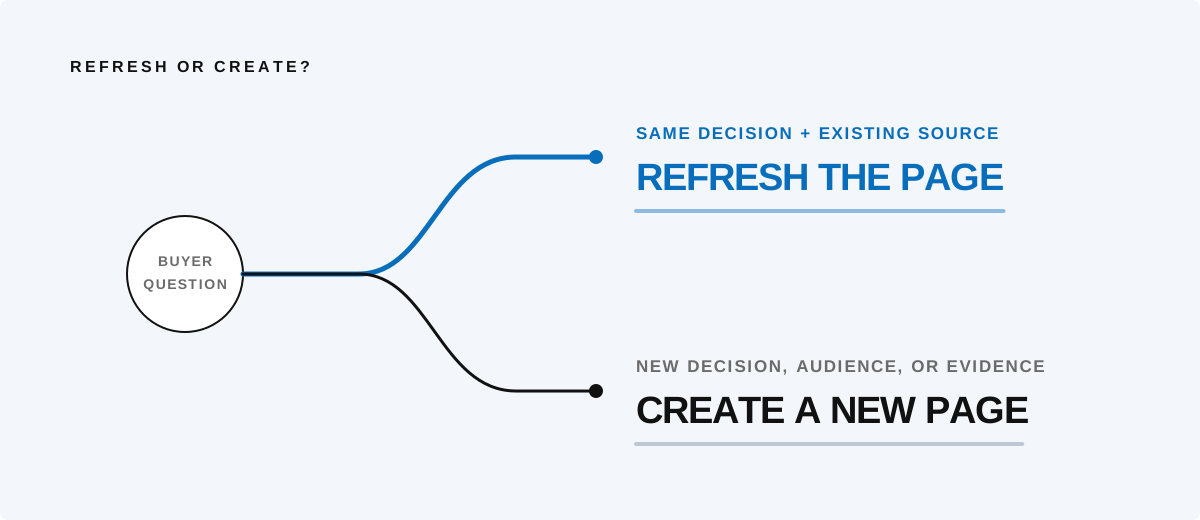
A pricing methodology and a pricing calculator may belong on separate pages because one explains the method and the other performs a task. A category guide and an implementation checklist may support different stages of the buying process. A research report may deserve a stable source URL even when an existing article discusses its findings.
Do not create a new page for every wording variation. Google's current guidance for generative AI search says that a high quantity of pages does not make a site more relevant and warns against creating separate content for every possible search variation. The new page should have a new job.
Prioritize With Two Conditions
The strongest refresh candidates meet two conditions at once: the page already has evidence of commercial or discovery value, and its answer has a material gap.
A high-traffic page with no meaningful gap does not need an arbitrary rewrite. A weak page tied to no important buyer question may not deserve work at all. The opportunity is where an established source is carrying a valuable job badly.
Rank candidates by buyer importance first, answer gap second, and existing evidence third. This keeps the team from spending a month polishing informational pages while the product comparison, proof, implementation, and objection pages remain weak.
Measure the Page, Not the Publishing Event
Freeze the before state before editing. Save the page copy, current citations and mentions, answer accuracy, source patterns, Search Console page and query data, referral sessions, and any downstream action the page is expected to support.
After the change is live, let crawling and use occur before drawing a conclusion. Google allows site owners to request a recrawl for a few changed URLs through URL Inspection, but it states that a request does not guarantee immediate inclusion and that repeated requests do not make crawling faster.
Compare the same question set and page over time. Look for a more accurate answer, better source use, stronger coverage of the intended query group, qualified referrals, and evidence that the page helps the next buyer action. Record the date and substance of the refresh so the result is connected to a real change.
The goal is not to prove that refreshing always beats publishing. It is to stop treating new URLs as the default response to work that belongs on a source the company already owns.
The One-Sentence Version
Before publishing another AEO article, find the established page closest to the buyer decision and make its answer complete, current, supported, and clear.
Sources
Frequently Asked Questions
Which Pages Should Be Refreshed First for AEO?
Start with pages tied to important buyer questions that already show evidence of discovery, referral, citation, internal use, or commercial relevance. Prioritize the pages with the largest answer gaps.
Does Changing the Publication Date Count as a Refresh?
No. A meaningful refresh corrects or improves the answer. Changing a date without substantial content changes does not create new value.
When Should a Company Publish a New AEO Page?
Create a new page when the question supports a different buyer decision, audience, intent, or evidence artifact. If the core decision is unchanged, improve the established source instead.
How Should an AEO Content Refresh Be Measured?
Record the before state, annotate the change date, and compare the same page and question set across answer accuracy, mentions, citations, source use, Search Console trends, referrals, and downstream actions.