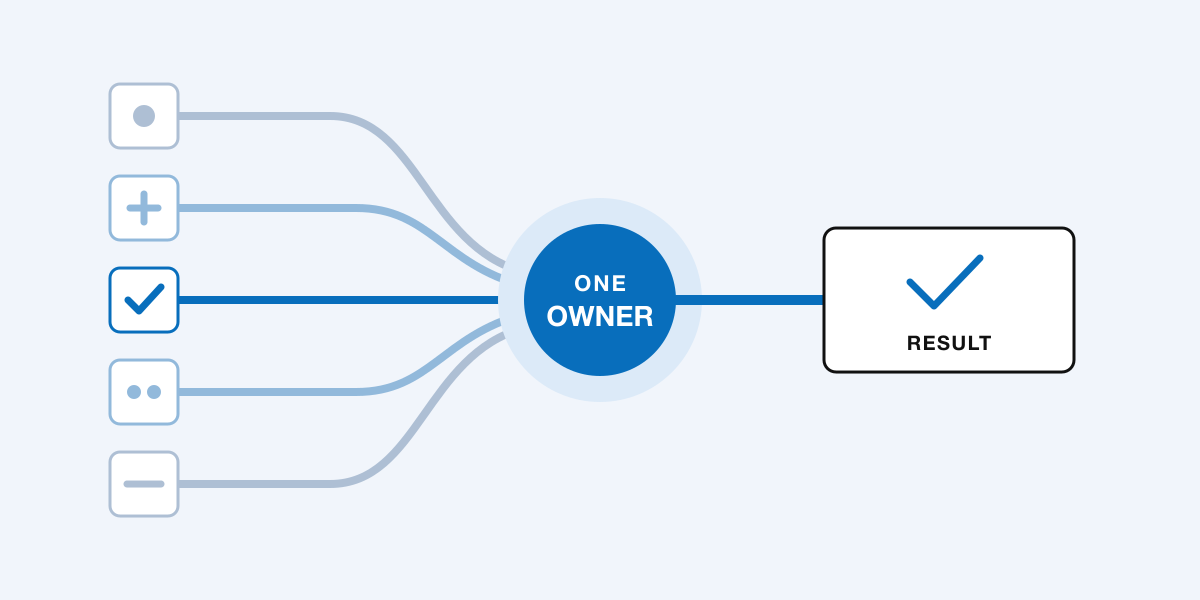
The AI-Native CMO Designs the System Before Buying the Tools
The operating model should determine the technology. A tool selected first will quietly determine how the team works, what it measures, and which compromises become permanent.
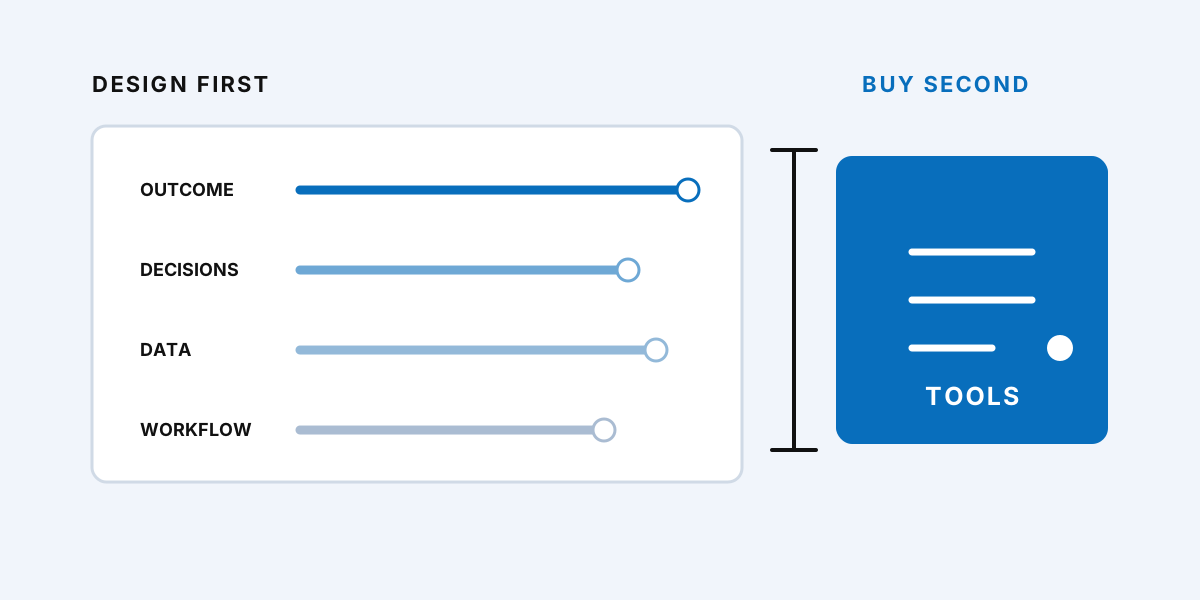
Most marketing technology evaluations begin too late in the decision.
A leader sees a strong demo, receives a recommendation, or hears that another company is moving faster with a new AI platform. The team opens a shortlist. Requirements get written around what the products already do. The winning tool arrives with a workflow, data model, permission structure, and definition of success hidden inside it.
The company believes it bought software. It also adopted the vendor's opinion about how marketing should operate.
The AI-native CMO writes the system brief before the vendor brief.
Tools Arrive With an Operating Model
Every tool makes assumptions. It assumes a unit of work, a sequence, a source of truth, and an owner. It decides which fields matter, which actions are easy, where review happens, and what the dashboard treats as progress.
Those assumptions may fit the company. They may also turn a campaign into a content queue, reduce a customer decision to an engagement score, or give an AI workflow access to information without explaining which source controls a claim.
Configuration can change some of this. It cannot repair an operating model the team never designed. A flexible platform can reproduce unclear decisions at greater scale.
This is the leadership problem behind the broken go-to-market system. Technology exposes the system it receives. It does not decide what the company should believe, own, or measure.
Begin With the Outcome and the Decision
"Use AI in marketing" is not a system objective. Neither is "produce more content" or "make the team more efficient." Those statements describe a direction without defining what should improve.
Start with the business outcome. Then identify the recurring decision that most directly changes it.
If the outcome is better conversion from qualified opportunities, the decision may be which evidence a buyer needs at a specific stage. If the outcome is stronger expansion, the decision may be which customer signal deserves intervention and who should act. If the outcome is lower campaign waste, the decision may be whether a request should proceed before production begins.
The tool requirement becomes clearer after the decision is clear. The team may need retrieval, classification, workflow routing, evaluation, controlled action, or a combination. It may discover that the first problem is not an AI problem at all.
Map the Operating Loop Before the Interface
A useful system design follows one real job from request to accepted result.
What triggers the work? Which evidence enters? What choice gets made? Who owns the consequence? Which action follows? What creates an exception? How does the team know the result was accepted? What correction should improve the next run?
This map should include the work currently held in memory. An experienced marketer may notice that a request conflicts with positioning, that a customer quote is stale, or that an apparent lead signal reflects an existing service problem. A tool cannot preserve that judgment until the business makes it visible.
OpenAI's use-case guidance recommends breaking workflows into individual tasks and prioritizing opportunities by impact and effort. That exercise becomes far more useful when the team keeps the business decision and accepted result visible across the whole workflow.
Finish the System Brief
The system brief is the smallest artifact that can prevent a feature demo from becoming the strategy. It records six operating decisions before the team compares products.
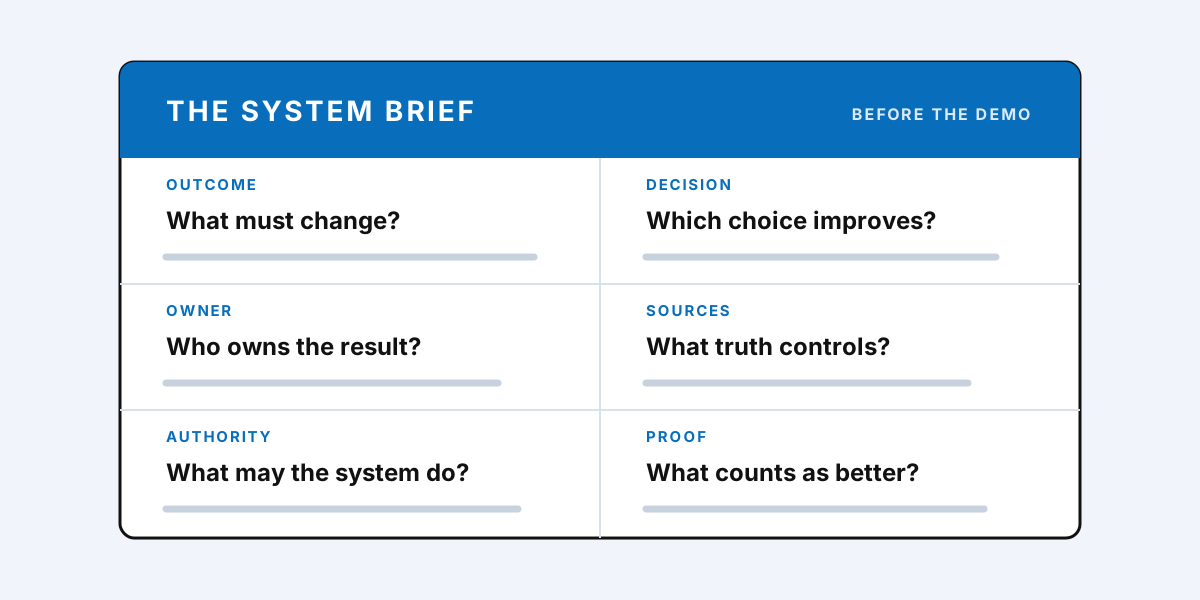
The outcome states what must change in the business. The decision identifies the choice the system should improve. The owner has authority over the result. Sources define which company truth controls. Authority limits what the system may do. Proof states what evidence will count as better.
These decisions do not need a long transformation program. A qualified team can write a useful first brief from a real workflow, test it against representative cases, and expose the disagreements that matter before procurement starts.
Translate the Brief Into Capability Requirements
Requirements should describe what the operating system needs, not repeat a vendor category.
"We need an AI content platform" is a category request. "The system must retrieve current approved product claims, preserve source provenance, draft within a declared campaign decision, stop when evidence conflicts, and record the accepted result" is an operating requirement.
That requirement can be tested. It also gives the team room to choose the simplest working architecture. A fixed workflow may handle most of the job. One model call may be enough. A bounded agent may be justified when the valid path changes with the evidence. A human decision may remain where the company has not settled the policy.
Anthropic recommends beginning with the simplest solution and adding agentic complexity only when it improves task performance enough to justify more latency and cost. OpenAI similarly recommends validating the use case before committing to an agent. The CMO does not need to choose the technical pattern alone. The CMO does need to keep the business requirement from disappearing inside the technical choice.
Run an Operating Test, Not a Feature Tour
A polished demo proves that the vendor can show a polished demo. It does not prove that the tool can operate inside the company's context, exceptions, permissions, and measurement.
Use the company test
Representative work: Include ordinary cases, missing context, conflicting evidence, and requests outside policy.
Company sources: Test approved material, real schemas, freshness rules, and provenance.
Declared authority: Verify which actions run, pause, or require a qualified decision.
Accepted result: Grade the final business artifact, correction time, and exception burden.
Full operating cost: Include integration, review, maintenance, data repair, and removal.
The team should leave the evaluation knowing where the tool fits, what work remains outside it, and which compromises the business would be accepting. If the vendor cannot support that test, the feature list is irrelevant.
Buy the Smallest Complete Stack
The goal is not the fewest tools at any cost. It is the smallest set that can complete the designed job without duplicating context, hiding ownership, or creating manual reconciliation between systems.
A broad platform may be the right answer when shared context, permissions, workflow state, and evaluation matter more than specialized depth. A focused tool may be better when it performs one material job substantially better and can enter the existing system without creating a second source of truth.
The system brief makes that tradeoff visible. Without it, every product can appear necessary because every product defines a slightly different problem.
Pilot the Loop, Then Expand Authority
Start with one bounded workflow and run it from valid request to accepted result. Preserve the inputs, decisions, outputs, corrections, and exceptions. The first pilot should teach the company whether its operating model is complete.
Do not confuse adoption with proof. Logins, prompts, generated assets, and automated steps show activity. Measure accepted results, correction time, human review, exceptions by reason, total cost, and movement in the business outcome.
Expand the system when those measures improve at the same level of consequence. More users and more automation should follow evidence, not substitute for it.
The CMO Owns the Business Architecture
The CMO does not need to draw every integration or choose every model. Marketing engineering, operations, data, technology, security, and functional leaders should shape the build.
The CMO owns the part nobody else can supply: the intended business result, the decisions marketing should make, the customer and company truth those decisions require, the acceptable tradeoffs, and the standard for whether the system deserves to grow.
Tools will change. The operating logic should remain inspectable enough that the company can replace a component without rebuilding its judgment from an empty screen.
The One-Sentence Version
Define the outcome, decisions, context, workflow, ownership, authority, and proof before asking which AI tools to buy.
Sources
Frequently Asked Questions
What Should a CMO Define Before Buying an AI Tool?
Define the business outcome, decision to improve, accountable owner, workflow, source truth, system authority, exception path, and evidence that will count as a better result.
How Should a Marketing Team Evaluate an AI Vendor?
Use representative company work, approved data, declared acceptance tests, required integrations, and the full operating cost. Evaluate the accepted result and correction burden rather than the best demo output.
Should Marketing Choose a Platform or Several Specialized AI Tools?
Choose the smallest set that can operate the designed workflow with clear context, permissions, handoffs, evaluation, and ownership. The system requirements should decide whether one platform or several components are justified.
Who Owns the Design of an AI-Native Marketing System?
The CMO owns the operating model and business result. Marketing engineers, operations, data, technology, and functional leaders contribute the technical and workflow design.