How to Correct What AI Search Gets Wrong About Your Company
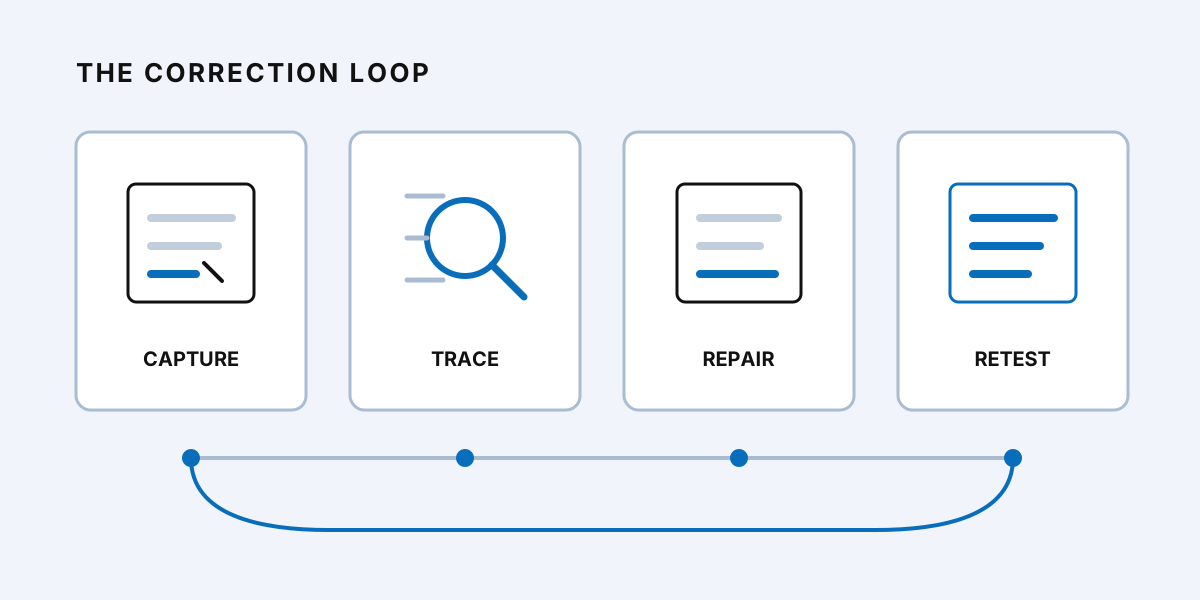
Do not argue with the screenshot. Capture the inaccurate claim, trace the likely source path, repair the deepest wrong source, and test again after discovery catches up.
An AI answer says the company serves the wrong market. It repeats an old product limitation. It describes a discontinued price, assigns the company to the wrong category, or recommends a competitor for a capability the company actually has.
The first reaction is usually to rewrite the website or ask how to submit a correction to the model.
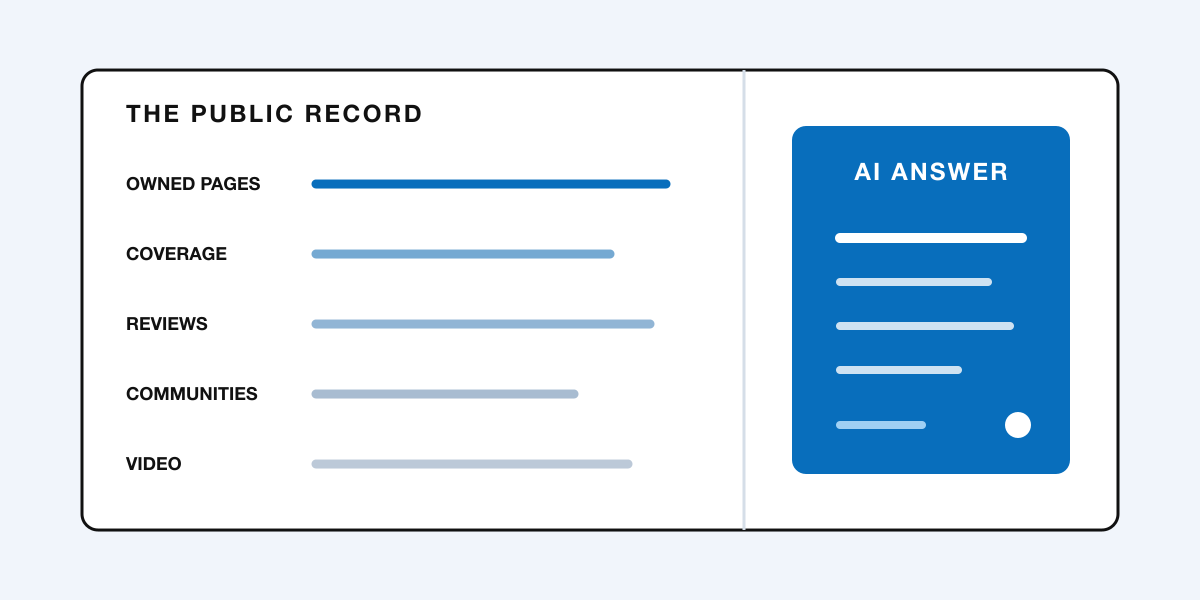
That skips the diagnosis. The answer may reflect an outdated owned page, an outside article, a review pattern, an inaccessible update, or a reasonable conclusion drawn from conflicting public evidence. The visible answer is the symptom.
Correct the source of the claim, not the surface where the claim appeared.
Capture the Failure Before It Changes
AI answers can vary with wording, product mode, date, follow-up questions, location, and account context. Save the complete result before investigating.
Record the exact prompt, full answer, inaccurate sentence, cited links, answer product, mode, and date. Preserve a screenshot or export. If the answer emerged after follow-up questions, save the whole sequence.
Then write the current company truth in one sentence and name its owner. A correction process cannot work when the business itself has not agreed on the answer.
The Correction Record
Observed answer: What did the system say, in full context?
Wrong claim: Which exact statement is inaccurate or materially incomplete?
Current truth: What should a qualified source say instead?
Evidence: Which source proves the correction?
Owner: Who has authority to confirm and maintain that truth?
Retest set: Which prompts will show whether the answer changed?
Classify What Is Wrong
Different failures require different repairs.
A factual error states something false. A freshness error repeats something that used to be true. A category error places the company in the wrong market. A coverage gap omits a capability or customer fit the public record barely explains. A comparison error applies an unsupported distinction between the company and a competitor.
Some answers are accurate but uncomfortable. Reviews may describe a recurring implementation problem. Outside coverage may use a category the company has not successfully replaced. Competitors may have stronger public proof for a claim the company believes it should own.
Do not label every unfavorable answer a hallucination. The correction may need to happen in the product, positioning, or evidence before it happens in search.
Trace the Likely Source Path
Start with the citations shown in the answer. Open each source and find the sentence, table, title, date, or implication that could support the wrong claim. Record whether the source is owned, independent, current, and directly relevant.
A citation may support only part of the response. The product may also retrieve related pages or synthesize a conclusion across sources. Search the exact wrong phrase, older category names, previous pricing, outdated documentation, directory profiles, interviews, and repeated review language.
Compare the strongest sources side by side. If the company website says one thing while public documentation, partner pages, and reviews say another, the problem is inconsistency. If every outside source is current and the owned page is vague, the problem is missing company truth. If the cited page has already changed, the problem may be discovery lag.
Repair the Deepest Wrong Source First
Begin at the lowest layer that contains the error. A correction made higher in the stack can disappear while the controlling source remains wrong.
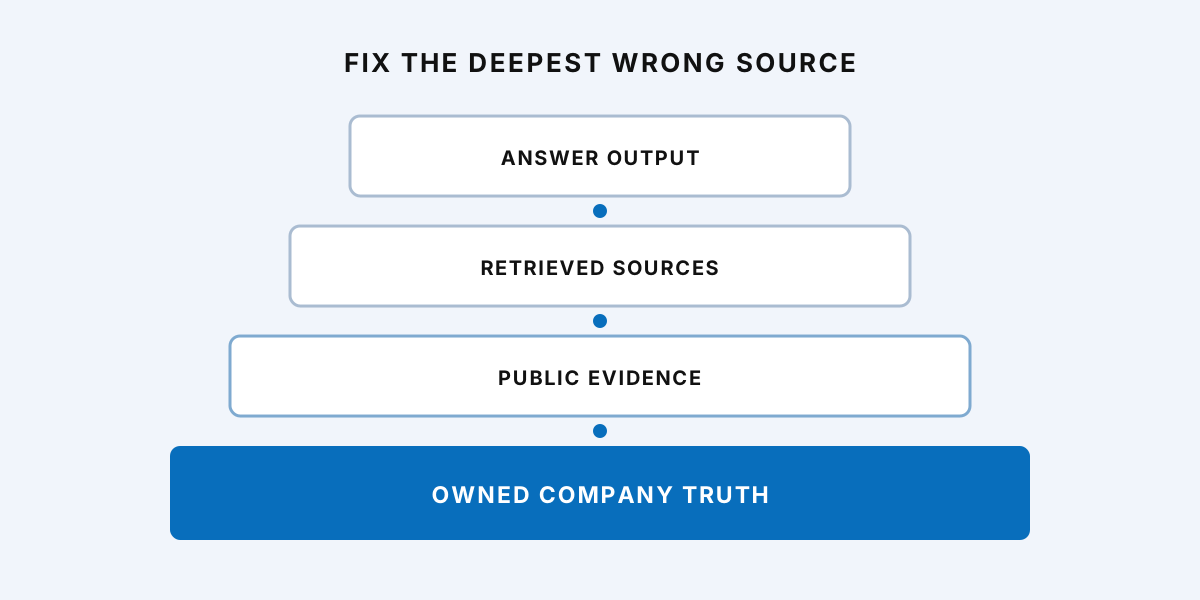
If the product fact is wrong internally, fix the internal source before publishing a new page. If the owned website is stale, update the canonical page that should carry the answer. If several owned pages conflict, choose the controlling source and repair or redirect the others.
Make the correction explicit. State the current fact in plain text. Add the evidence, scope, effective date, and necessary qualification. Update the modification date only when the page changed substantially. Preserve a change note so the team knows what was corrected and why.
Strengthen the Outside Evidence
An owned correction may be necessary without being sufficient. The public record can still contain stronger or more numerous versions of the old claim.
For a factual mistake in an article, profile, directory, or partner page, contact the source with the exact correction and a stable company reference. Make the request easy to verify. Do not ask the publisher to adopt marketing language unrelated to the error.
Reviews and community discussions require a different response. Correct the underlying product or expectation. Publish accurate guidance. Respond with disclosure where participation is appropriate. Do not manufacture favorable posts to overwhelm a real complaint.
When the gap is missing proof, create proof worth citing. Public documentation, transparent methods, customer evidence with approval, research, demonstrations, and qualified expert commentary can give outside sources something more substantial than a claim.
This is the operating consequence of treating AEO as a reputation system. The answer changes when the public evidence becomes clearer, not when the company repeats the preferred sentence more often.
Make the Correction Discoverable
A correct page cannot influence retrieval when crawlers cannot reach it, the update sits behind client-side interaction, the URL is blocked, or internal links still point to the old source.
Check robots rules, noindex directives, canonical tags, server responses, rendered text, internal links, and sitemap lastmod. OpenAI advises publishers to allow OAI-SearchBot when they want page content included in ChatGPT search summaries and snippets. Google requires eligible pages to be indexed for supporting links in AI features.
For important owned pages, request a recrawl through the supported webmaster tools. Google states that recrawling can take days or weeks and does not guarantee immediate inclusion. Bing recommends accurate sitemap updates and IndexNow notifications when content is added, updated, or removed.
Discovery tools can notify a search system that a source changed. They cannot force an answer engine to use the page or repeat the company's preferred wording.
Retest the Same Prompt Set
Do not test once with a friendlier prompt and declare success. Reuse the original prompt, the relevant follow-ups, and a small set of natural variations tied to the same buyer question.
Record the full answer, citations, source pattern, and accuracy grade each time. Test on a declared schedule rather than refreshing until a favorable result appears. Retrieval and model behavior can vary, so look for a sustained change across repeated observations.
Separate source progress from answer progress. The owned page may be corrected and indexed while outside evidence remains stale. A citation pattern may improve before the generated wording changes. The answer may improve in one product before another discovers the same source.
Keep a Correction Log
Every correction should leave an operating record: prompt, wrong claim, source diagnosis, changes made, discovery actions, retest dates, and outcome.
The log reveals repeated failure patterns. One category may be poorly defined across the site. Product changes may reach documentation late. Review language may expose the same expectation gap. A single old comparison page may control several answers.
Use that evidence to repair the system that creates public truth. Better source ownership and publication handoffs reduce the number of corrections that AEO must chase later.
Know When the Answer Is Telling You the Truth
The company does not own the conclusion. It owns the accuracy of its claims, the quality of its evidence, and the work required to correct the underlying reality.
If qualified outside sources consistently describe the company differently, investigate why. The answer may be reflecting a reputation problem rather than creating one.
A correction process succeeds when the public record becomes more accurate and useful to the buyer. A favorable sentence is not enough if the evidence remains weak.
The One-Sentence Version
Capture the wrong answer, trace its likely sources, repair the deepest authoritative source, strengthen the public evidence, and retest after discovery catches up.
Sources
Frequently Asked Questions
Can a Company Directly Correct an AI Search Answer?
Usually not. A company can repair the accessible sources that support the wrong claim, improve public evidence, request discovery where available, and retest. The answer engine controls its final response.
What Should Be Recorded When AI Search Gets a Company Fact Wrong?
Record the exact prompt, full answer, wrong claim, cited sources, product and mode, date, location or account context when relevant, and a screenshot or saved response.
How Long Does an AI Search Correction Take?
There is no guaranteed timeline. Owned pages must be updated and rediscovered, outside sources may need separate correction, and answer behavior can vary across products and prompts.
What Should a Company Fix First?
Fix the deepest authoritative source that is wrong. Start with current owned company truth, then repair inconsistent public evidence and discovery barriers before retesting the answer.