Comparison Pages Work When They Tell the Truth
A useful comparison page helps a buyer choose between real alternatives. It states the advantage, publishes the tradeoff, and says when another option is the better fit.

Most vendor comparison pages begin with the verdict and work backward. The company's product wins every category. The competitor is reduced to an old limitation, a higher price, or a feature the author knows the buyer will dislike.
The page may rank. It may even create leads. It fails at the job that made the buyer search for a comparison in the first place.
The buyer is trying to understand a decision. A page that hides the decision behind a sales script creates more work for the buyer and less trust in the company publishing it.
A comparison earns attention by making the tradeoff clearer than either vendor's pitch.
Compare the Decision the Buyer Is Actually Making
Two products can sit in the same category without being credible alternatives for the same customer. One may serve a smaller team with a focused workflow. The other may be built for governance across business units. A feature checklist makes them look close while the operating choice is completely different.
Start with the buyer, job, and trigger. Name the situation that puts both options on the shortlist. Then identify the few criteria capable of changing the decision.
A useful comparison might turn on implementation effort, control, service model, data requirements, pricing structure, or the cost of switching. If a criterion cannot change the choice, it does not deserve a row in the table.
Do not create a page for every competitor name a keyword tool returns. Publish when the comparison represents a recurring buyer decision and the company has enough evidence to explain it.
Write the Decision Brief Before the Page
The brief should fit into four sentences. Name the buyer and the job. State the choice being made. Identify the conditions that change the winner. Point to the evidence that supports those conditions.
Then assign an owner and a review trigger. If the team cannot write that brief, it does not understand the comparison well enough to publish the page.
Use the Same Standard for Every Option
A comparison becomes propaganda when the standards change by column.
The publisher describes its own product from a current enterprise plan and the competitor from an old starter plan. Its own implementation claim comes from a guided customer project while the competitor is judged from a self-service trial. Its own roadmap is treated as a capability, but the competitor receives credit only for what is publicly documented.
Use the same version, pricing scope, customer condition, and evidence standard. If equivalent information is unavailable, label the gap instead of filling it with an assumption.
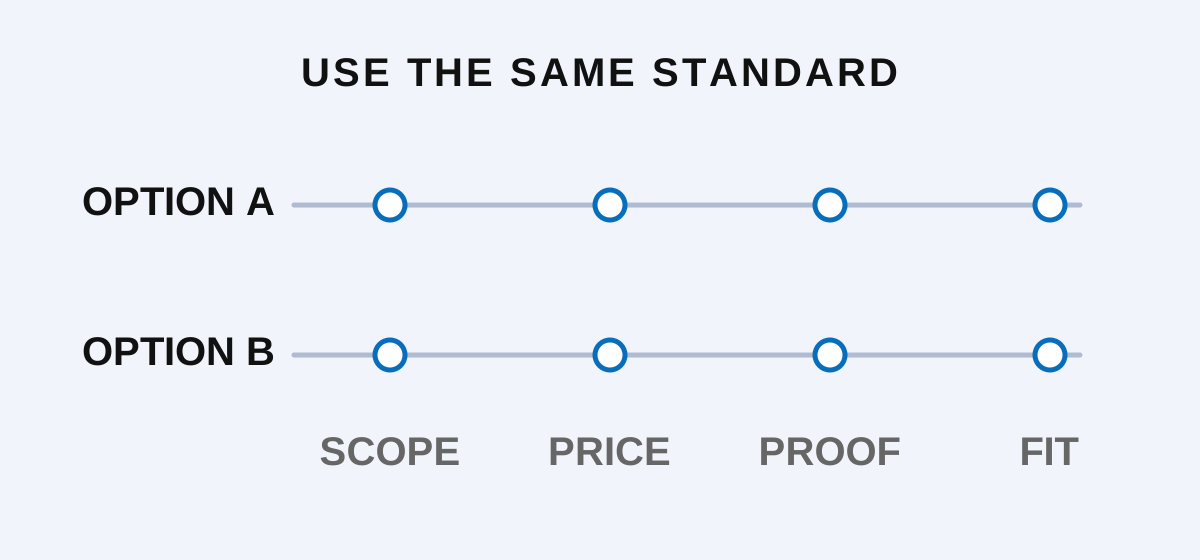
Scope matters more than it appears. "Less expensive" could mean a lower list price, a smaller contract, fewer required services, or lower total operating cost. "Faster" could describe setup, time to first output, or a tested workload. State which one the comparison means.
The Federal Trade Commission supports truthful comparative advertising and says the basis of comparison should be clearly identified. Its substantiation policy also requires a reasonable basis for objective advertising claims before they are published.
Separate Facts From Judgment
Facts should be checkable. The published price, supported integration, contract term, certification, product limit, and service policy should point to a current source.
Judgment should be declared as judgment. "Better for a lean team" is an interpretation built from several facts. It needs a visible reason. "Enterprise-ready" is empty unless the page explains the governance, security, deployment, support, or operating requirements behind the label.
This separation improves the article. It lets the buyer challenge the reasoning without wondering which basic facts were invented.
Google's guidance for high-quality reviews follows the same practical standard. It recommends first-hand evidence, quantitative measurement when appropriate, meaningful benefits and drawbacks, comparable alternatives, and an explanation of which option fits a particular use or circumstance.
Show the Work Behind the Claim
Competitor landing pages are poor sources for competitor facts. Use the competitor's current documentation, pricing pages, policies, release notes, and support material. Preserve the source URL and review date internally. When a fact came from direct testing, state the environment, version, task, and method.
Do not manufacture a test result because a comparison needs a chart. If the team has not measured speed, do not call one product faster. If total cost depends on services and usage, show the variables rather than a fake total.
Evidence should match the strength of the claim. A published feature page can support that a capability exists. It cannot prove that the capability performs better. One customer story can demonstrate an outcome. It cannot establish the normal result for every customer.
Original work is valuable because it reveals something the buyer cannot learn from two product pages placed side by side. The method has to be visible enough for the reader to understand what was actually tested.
Publish When the Other Option Is Better
Every real strength creates a boundary.
A highly configurable product may require more administration. A focused product may reach value faster while supporting fewer edge cases. A service-heavy model may be the right choice for a team that lacks internal capacity and the wrong choice for a team that wants direct control.
Name those boundaries. Say who should choose the company's option and who should choose the other one.
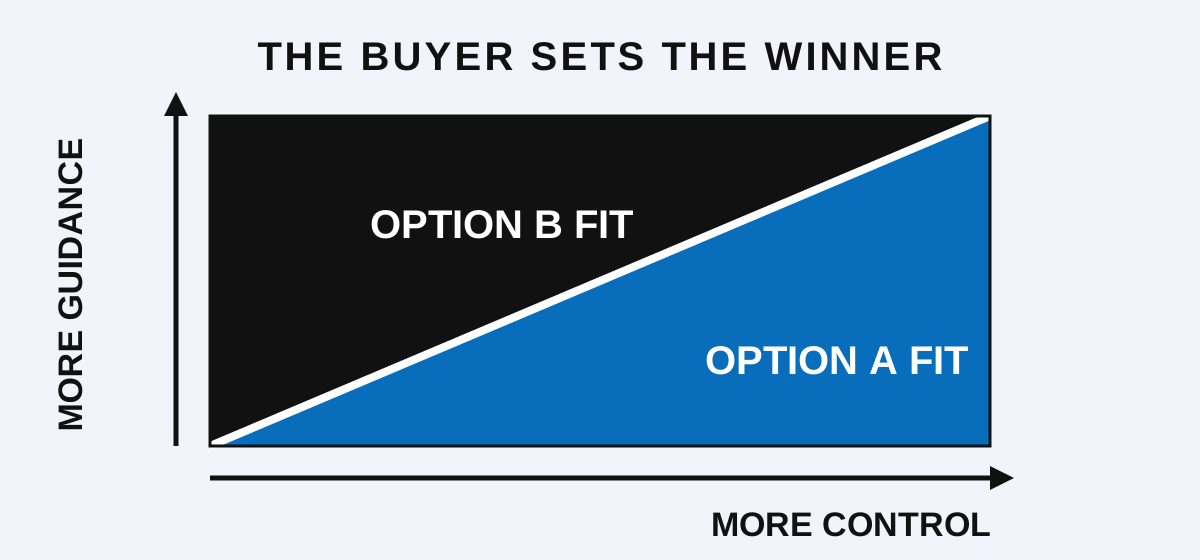
This does not weaken the sales argument. It filters out buyers who would discover the mismatch later and gives qualified buyers a reason to believe the rest of the page.
The hard sentence is often the most useful one: choose the competitor when a specific requirement matters more than the company's advantage.
Do Not Hide the Tradeoff in a Footnote
Some pages technically disclose the disadvantage but bury it beneath a long feature grid. The headline declares victory while the qualification appears after the call to action.
Put material tradeoffs beside the advantage they create. If the product is easier because it offers fewer configuration choices, those facts belong together. If a lower starting price excludes required services, show the service requirement beside the price.
The buyer should not need to reconstruct the honest answer from five sections and a pricing calculator.
Write a Source AI Search Can Safely Reuse
Comparison pages can shape AI answers because they state entities, alternatives, differences, and decision conditions in one place. That makes accuracy more important, not less.
Use direct headings. State the current version and scope. Keep factual claims near their sources. Make the best-fit conditions explicit in normal text instead of leaving them inside an image or interactive table. A model or crawler may miss content hidden behind a tab.
Do not expect the page to control the conclusion. AI answers can also draw from reviews, communities, expert coverage, customer evidence, and competitor sources. This is why AEO operates as a reputation system. The comparison has to survive contact with the rest of the public record.
A clean page may still be ignored. A dishonest page can create a worse problem when its claims are repeated, challenged, or later corrected in public.
Treat Comparison Pages as High-Maintenance Sources
Pricing changes. Packaging moves. Features launch and disappear. A company that publishes competitor facts takes on the maintenance work those facts require.
Give every high-intent comparison page an owner and review trigger. Product releases, pricing changes, acquisitions, policy changes, and material competitor launches should create a review task. Use a scheduled audit for everything else.
Update the page when the underlying decision changes, not to create a cosmetic freshness signal. Keep an internal change note that identifies the fact revised, source checked, and reasoning affected.
If the public comparison becomes inaccurate, use the source-repair process in How to Correct What AI Search Gets Wrong About Your Company. A stale comparison can become part of the wrong answer another company has to repair.
Measure Whether the Page Improved the Decision
Rankings and conversion rate matter, but neither proves that the comparison is useful. A manipulative page can convert by hiding information that later creates poor-fit pipeline.
Watch the questions buyers ask after reading it. Look for fewer basic qualification disputes, stronger self-selection, and sales conversations that begin with the real tradeoff. Review whether the page attracts the use cases it describes as a fit.
The page succeeds when it helps the right buyer move forward and gives the wrong-fit buyer a clear reason not to.
The One-Sentence Version
Compare the real buyer decision, use the same evidence standard, publish the tradeoffs, and say when another option is better.
Sources
Frequently Asked Questions
Should a Company Name Competitors on a Comparison Page?
Yes, when the competitor is part of a real buyer decision and the comparison uses current, supportable facts. The basis of comparison should be clear and applied consistently to every option.
What Should a Comparison Page Include?
Include the buyer and job being compared, decision criteria, current facts, evidence sources, material tradeoffs, best-fit conditions for each option, version dates, and an owner for future updates.
Should a Comparison Page Say When a Competitor Is Better?
Yes. Naming the situations where another option is a better fit makes the decision rule useful, reduces poor-fit demand, and gives the rest of the comparison more credibility.
How Often Should Comparison Pages Be Updated?
Review them whenever pricing, packaging, capabilities, policies, or product versions change. High-intent comparison pages should also have a scheduled owner review because stale facts can mislead buyers and AI answers.